Inside the BidHelm Engine
A technical look at how Alex AI analyzes, decides, and executes optimizations across your Google Ads campaigns — every 30 minutes, 24/7.
4 phases. Every 30 minutes. Fully autonomous.
Each cycle pulls live data, runs analysis, makes decisions, and executes changes — all in under 2 minutes.
Phase 1: Data Pull
Alex pulls fresh performance data from the Google Ads API — impressions, clicks, conversions, cost, search terms, and quality scores across all campaigns and keywords. The last 90 days of historical data provide the statistical baseline.

Phase 2: Analysis
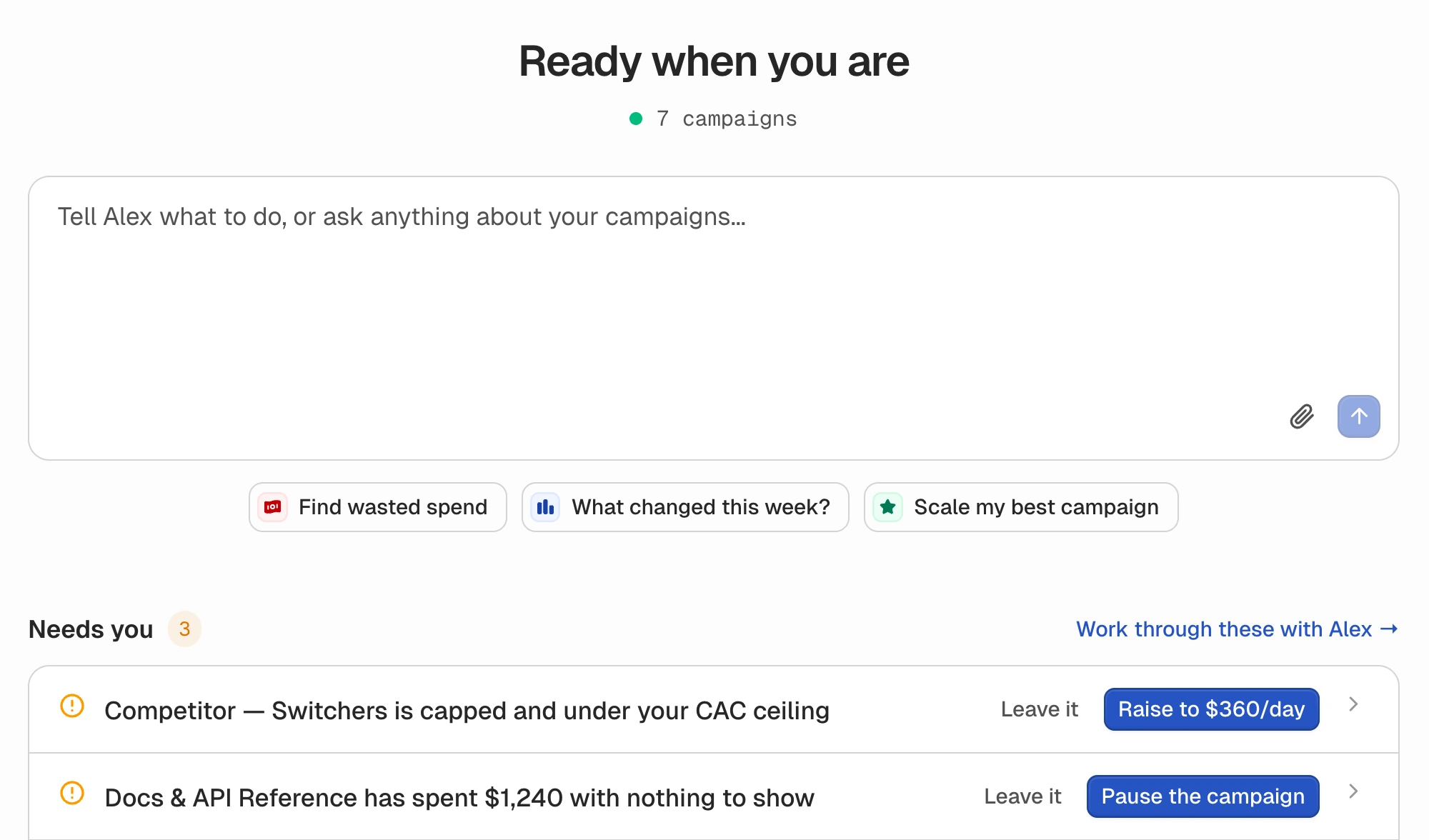
Every campaign and keyword is scored against statistical thresholds. Alex identifies waste (high spend, zero conversions), winners (low CPA, strong ROAS), anomalies (sudden CPA spikes), and scaling opportunities (campaigns hitting budget caps while performing well).

Phase 3: Decision
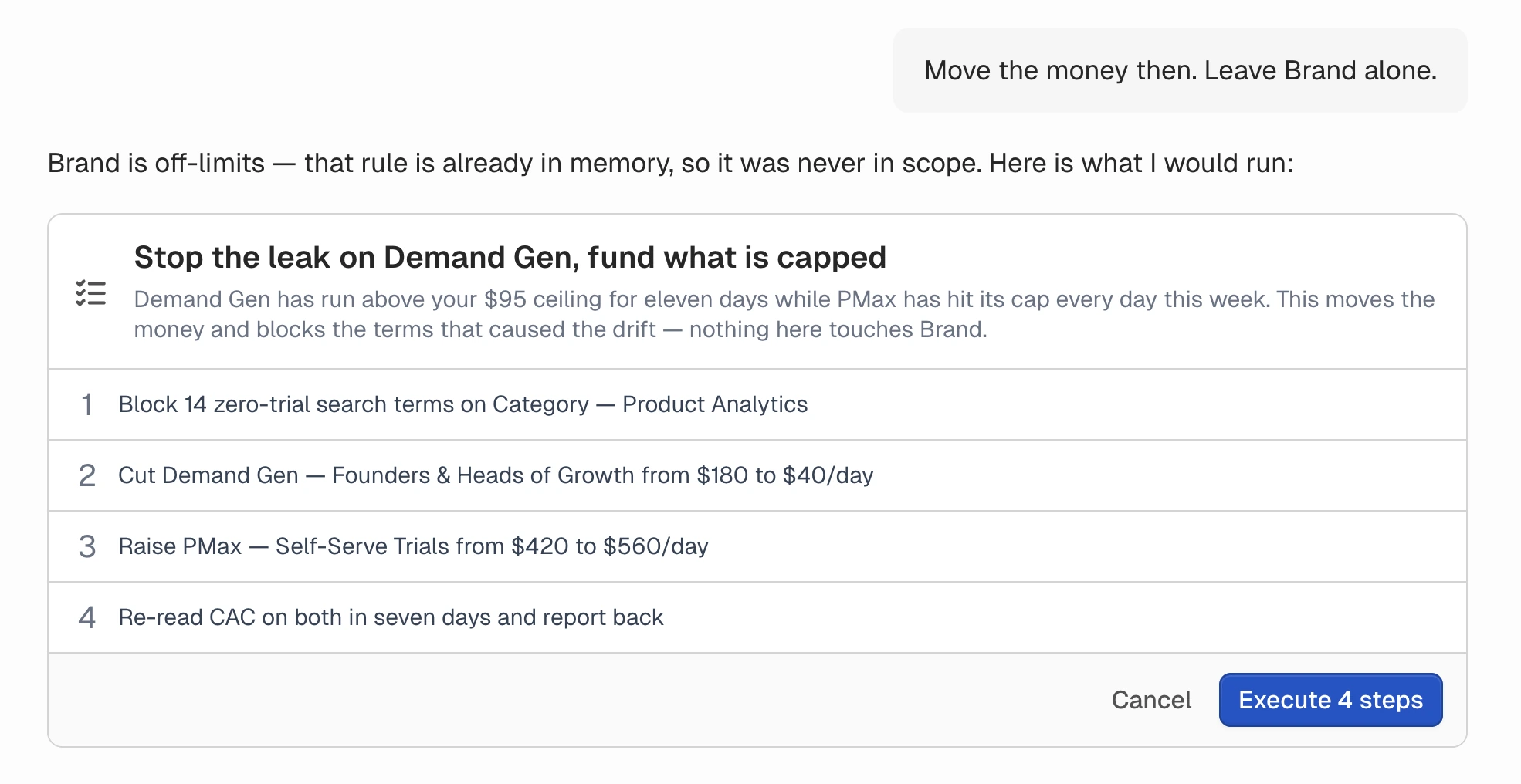
Based on analysis results, Alex determines which actions to take — pause a keyword, scale a budget, add negative keywords, or flag for review. Each decision is backed by Bayesian confidence scores and respects your chosen optimization mode (conservative, balanced, or aggressive).

Phase 4: Execution
Changes are applied via the Google Ads API in seconds. Every action is logged with before/after metrics, the rule that triggered it, and a confidence score. If anything goes wrong, one-click revert restores the previous state instantly.

Real scenarios Alex catches every day.
These are the kinds of waste and opportunity Alex finds in typical Google Ads accounts — often within the first scan.
Before
'garden furniture sets outdoor' — $890 spent, 0 conversions in 30 days. Still running.
After
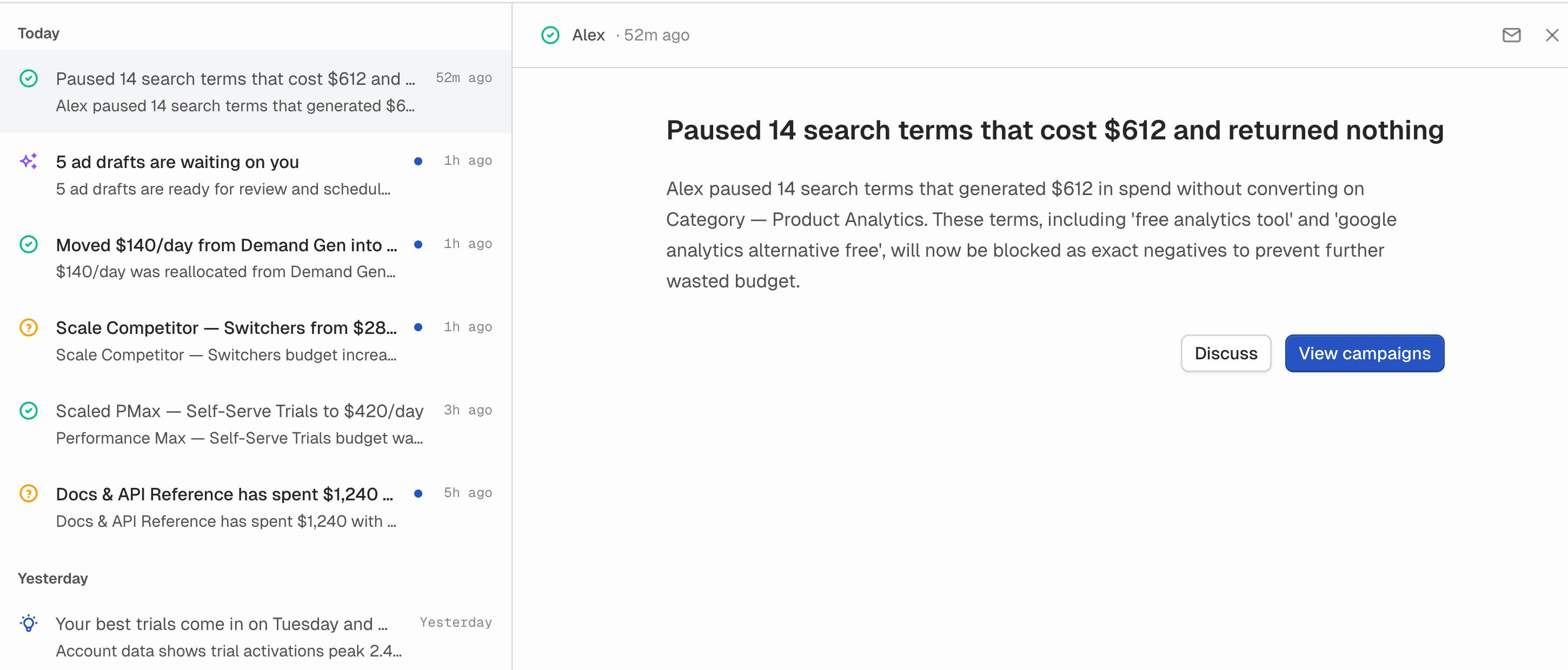
Alex paused it automatically. $890/month redirected to campaigns with proven conversions.
Before
'Lawn Care — Remarketing' at $8.20 CPA (account avg: $34). Budget maxed out daily by 2pm.
After
Alex increased budget 25%. Now capturing afternoon conversions at the same low CPA.
Before
23 irrelevant search terms ('free garden tips', 'garden furniture DIY') eating $340/week.
After
Alex added all 23 as negative keywords. $1,360/month in wasted clicks eliminated.
The technology behind every optimization.
Alex isn't a simple rules engine. Here are the technical differentiators that make BidHelm's optimizations smarter and safer.
Bayesian Testing
Statistical confidence scoring for every decision. Alex doesn't act on gut feelings — changes only happen when data reaches significance thresholds.
Anomaly Detection
Real-time monitoring for conversion drops, CPA spikes, and budget anomalies. Optimizations pause automatically if something looks wrong.
Diminishing Returns Calculation
Alex detects when scaling a campaign hits diminishing returns — preventing you from overspending on campaigns past their profitability peak.
3 Optimization Modes
Conservative, balanced, or aggressive. Each mode adjusts confidence thresholds, budget change limits, and how quickly Alex acts on underperformers.
Campaign-Type Strategies
Search, Shopping, PMax, Display, and Video each get dedicated optimization logic tuned to their unique metrics and conversion patterns.
Full Audit Trail
Every action logged with before/after data, confidence scores, and the specific rule that triggered it. Export anytime for compliance or reporting.
Every campaign type. One engine.
Alex automatically detects your campaign type and applies the right optimization strategy.
Search
Keyword-level CPA analysis, automatic pausing of zero-conversion terms, negative keyword management, and bid strategy alignment.
Shopping
Product-level ROAS tracking, budget reallocation to top-sellers, and automatic pausing of products with high spend and no conversions.
Performance Max
Asset group monitoring, budget pacing, and detection of underperforming signal groups across search, display, and video placements.
Display
Placement-level analysis, viewability monitoring, and automatic exclusion of low-quality sites draining your budget.
Video
View rate optimization, audience refinement, and budget shifting between in-stream and discovery formats based on conversion data.